Climbing Horcados Rojos from Fuente Dé: A Technical Guide
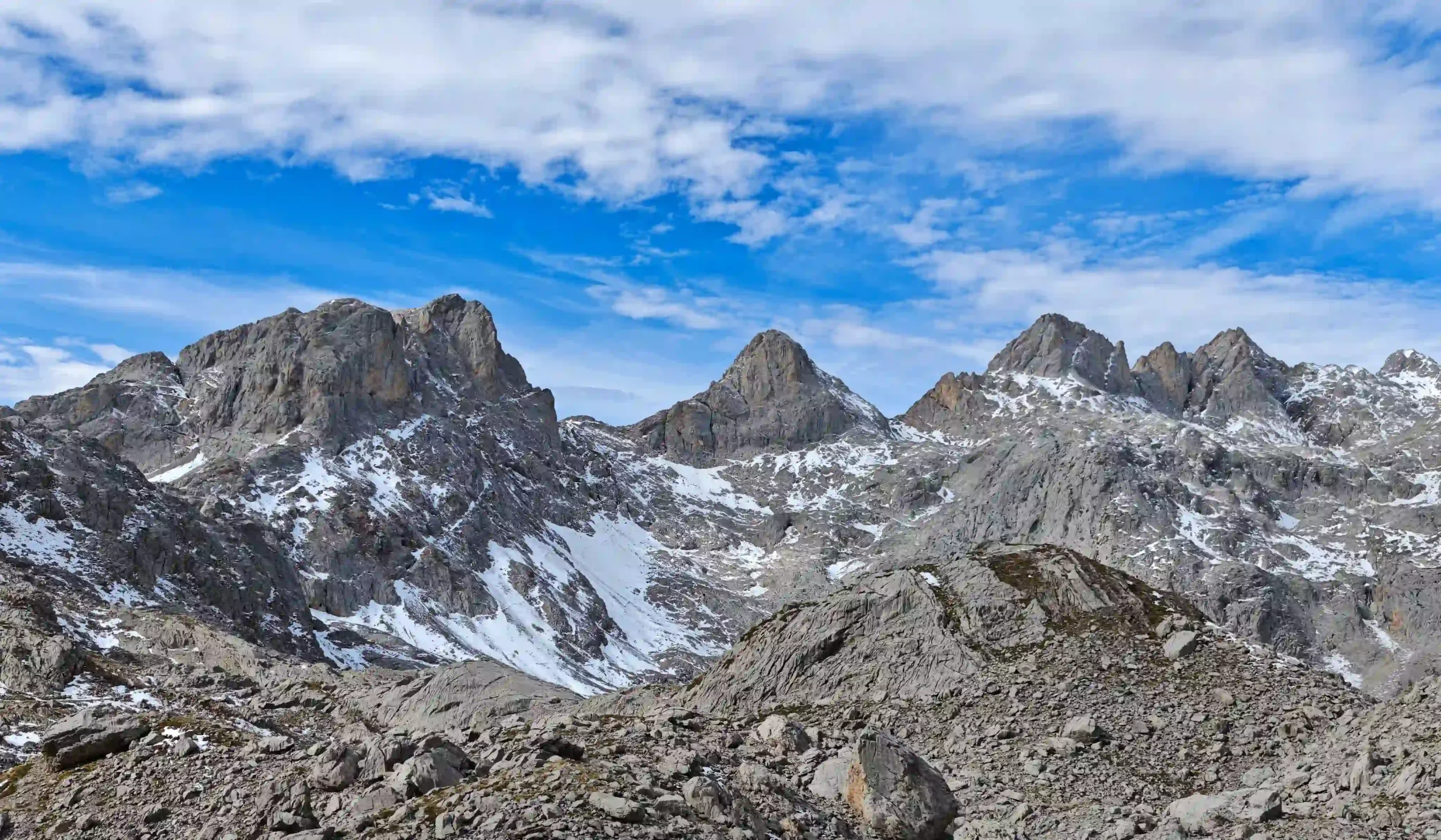
If there is one route that defines the essence of the Picos de Europa Central Massif, it is the ascent to Horcados Rojos. For many, it’s their first real contact with high-altitude mountains, but it should not be underestimated. There are no packed dirt trails here; limestone, argayo (rockslides), and jous (karst basins) rule this land.
Route Technical Sheet
- Distance: 11.5 km (round trip from El Cable).
- Elevation Gain: 550 m (using the cable car) / 1,300 m (hiking from the base).
- Terrain Type: Lapies (karst formations), limestone scree, and mountain trails.
- Estimated Time: 4–5 hours at a steady pace.
The Terrain: What’s Under Your Feet
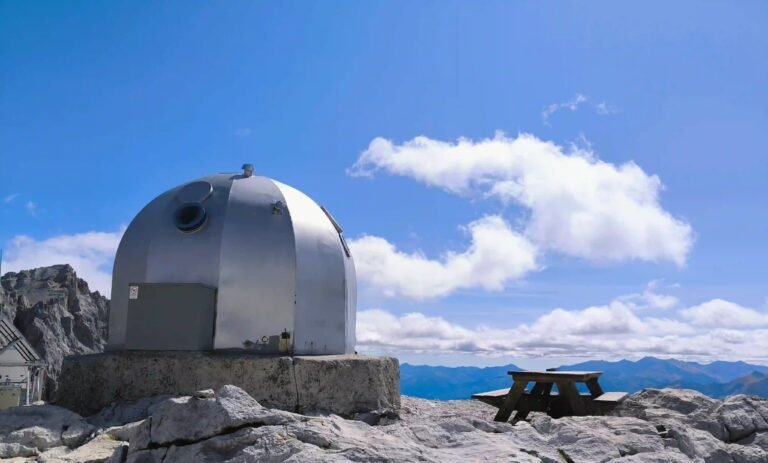
The route begins at the upper station of the Fuente Dé cable car, known as El Cable. From the very first meter, the landscape is purely mineral. Forget the green of the valleys; here, the predominant color is the ash-grey of the rock.
The initial path is a wide track crossing the Lloroza area. This is a zone of jous (karst depressions) where it is common to see snow well into June. The surface consists of loose stones, which can be taxing on the ankles if you aren’t wearing boots with good support. As we advance toward La Vueltona, the trail narrows, and the incline becomes more serious.
The route begins at the upper station of the Fuente Dé cable car, known as El Cable. From the very first meter, the landscape is purely mineral. Forget the green of the valleys; here, the predominant color is the ash-grey of the rock.
The initial path is a wide track crossing the Lloroza area. This is a zone of jous (karst depressions) where it is common to see snow well into June. The surface consists of loose stones, which can be taxing on the ankles if you aren’t wearing boots with good support. As we advance toward La Vueltona, the trail narrows, and the incline becomes more serious.
Passing the Base of El Tesorero
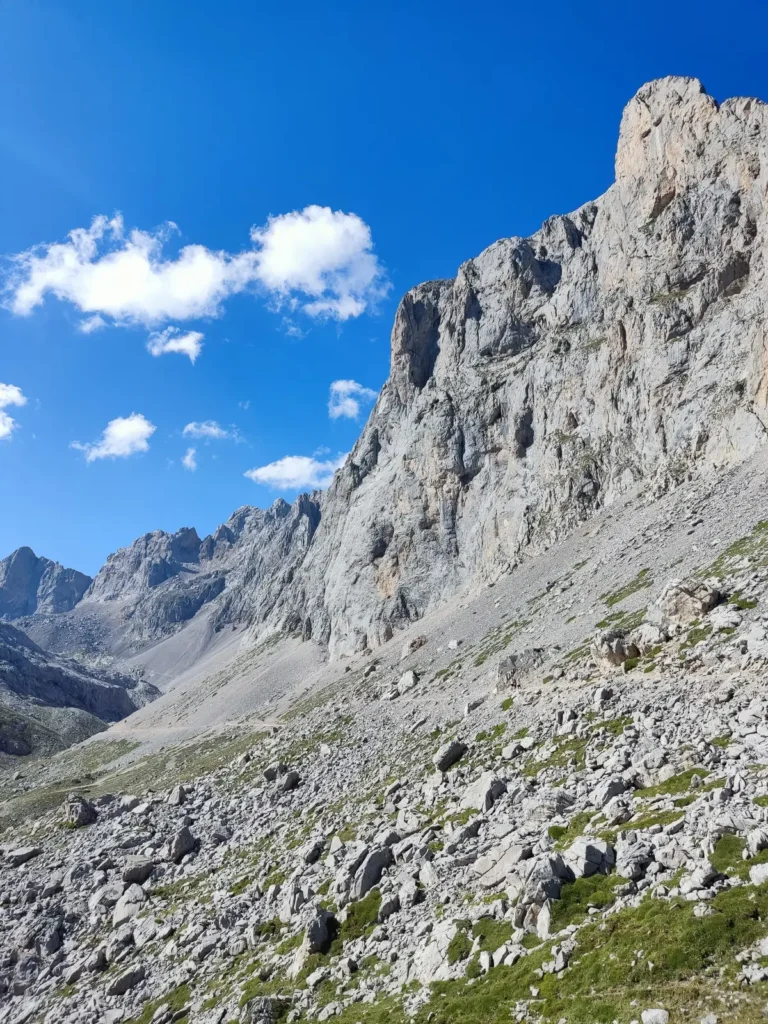
Midway through the ascent, we leave the path to Cabaña Verónica on our left. The trail toward the Horcados Rojos pass zigzags through a slope of decomposed limestone scree. In this area, the wind often gets funneled. It’s not a gusty coastal wind; it’s a dry air rolling off the peaks that, even in summer, will force you to pull your third layer out of your backpack.
What makes this route special is the scale. To your right sits the vertical wall of Pico Santa Ana; to your left, the pyramidal mass of El Tesorero. These are stone giants that block the sun until mid-morning, keeping the rock cold and damp with dew.
Reaching the Pass and the Urriellu Lookout
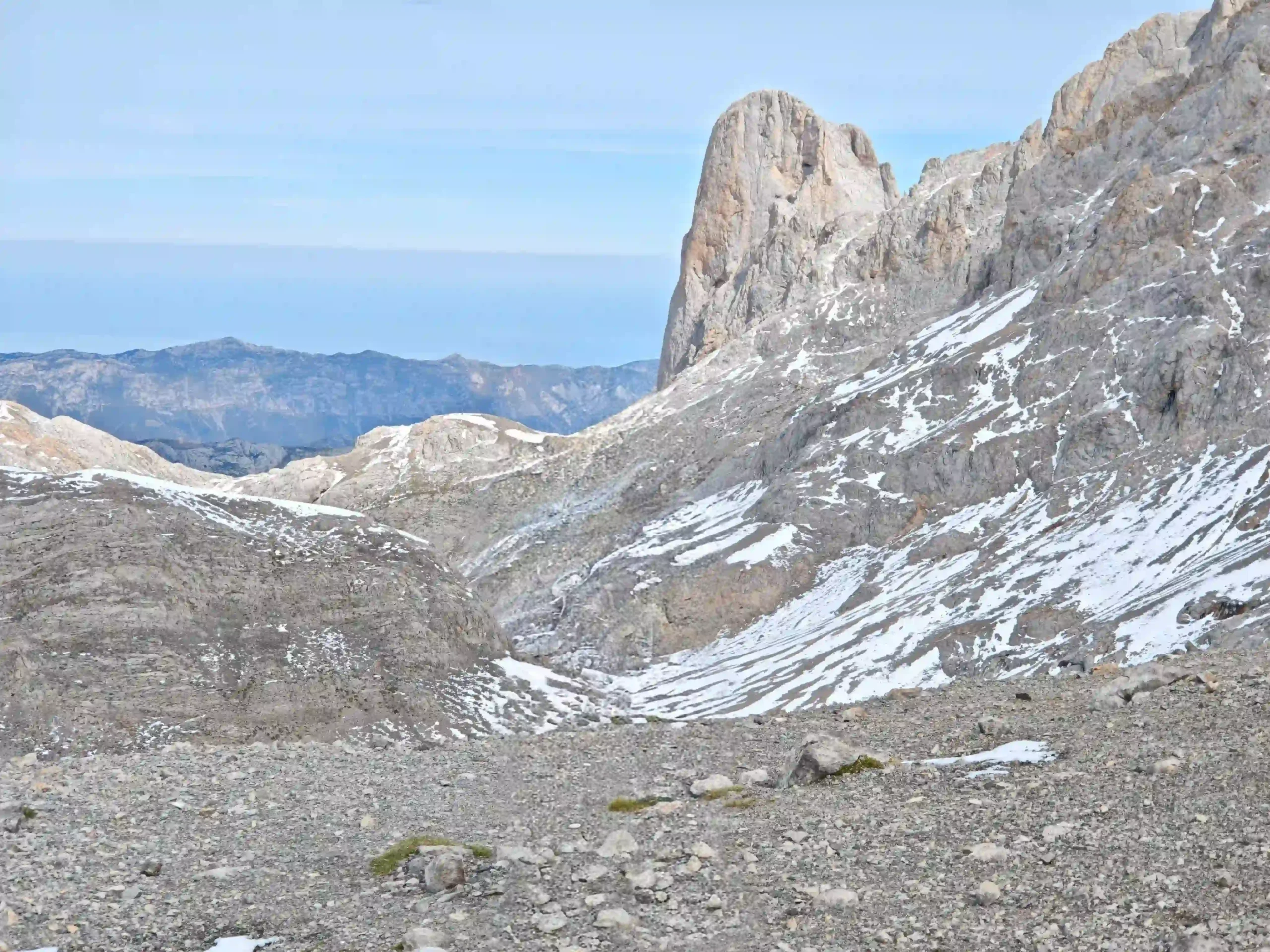
Upon reaching the pass (2,343 m), the perspective shifts. You find yourself on a natural balcony where the terrain drops vertically toward the Jou de los Boches. This is the point where the scent of sun-warmed rock mixes with the cleanest air you will ever breathe in Cantabria. On a clear day—without the typical nublo (thick fog) that can kill visibility in minutes—the Naranjo de Bulnes (Picu Urriellu) appears in the distance like a perfect limestone tooth.
Safety Recommendations from Cantabria Treks
- Watch out for ‘Lapies’: If you decide to step slightly off the marked path, be careful with crevices in the rock. Water erosion creates deep grooves that can cause injury if you don’t read the terrain correctly.
- Water Management: There isn’t a single spring along the entire route. The limestone filters rainwater deep into the ground, leaving the surface dry. Carry at least 2 liters of water per person.
- The Chamois (Rebecos): You are very likely to encounter them in the high zones. These animals are accustomed to human presence, but remember you are in their home; keep your distance and watch how they move across the crags. Their agility gives you an idea of how technical this ground really is.
Why Hike this Route with Cantabria Treks?
Climbing Horcados Rojos is a powerful visual experience, but understanding why the rock has that shape or identifying the surrounding peaks requires the eye of someone who lives here. My job isn’t just to get you there and back; it’s to help you understand the geology of the Picos and to make you feel secure when the trail becomes unstable beneath your boots.
If you want to avoid the crowds and discover the hidden corners that most people skip on this climb, book a day with us.