Cabaña Verónica Guide: The Highest Mountain Hut in Picos de Europa
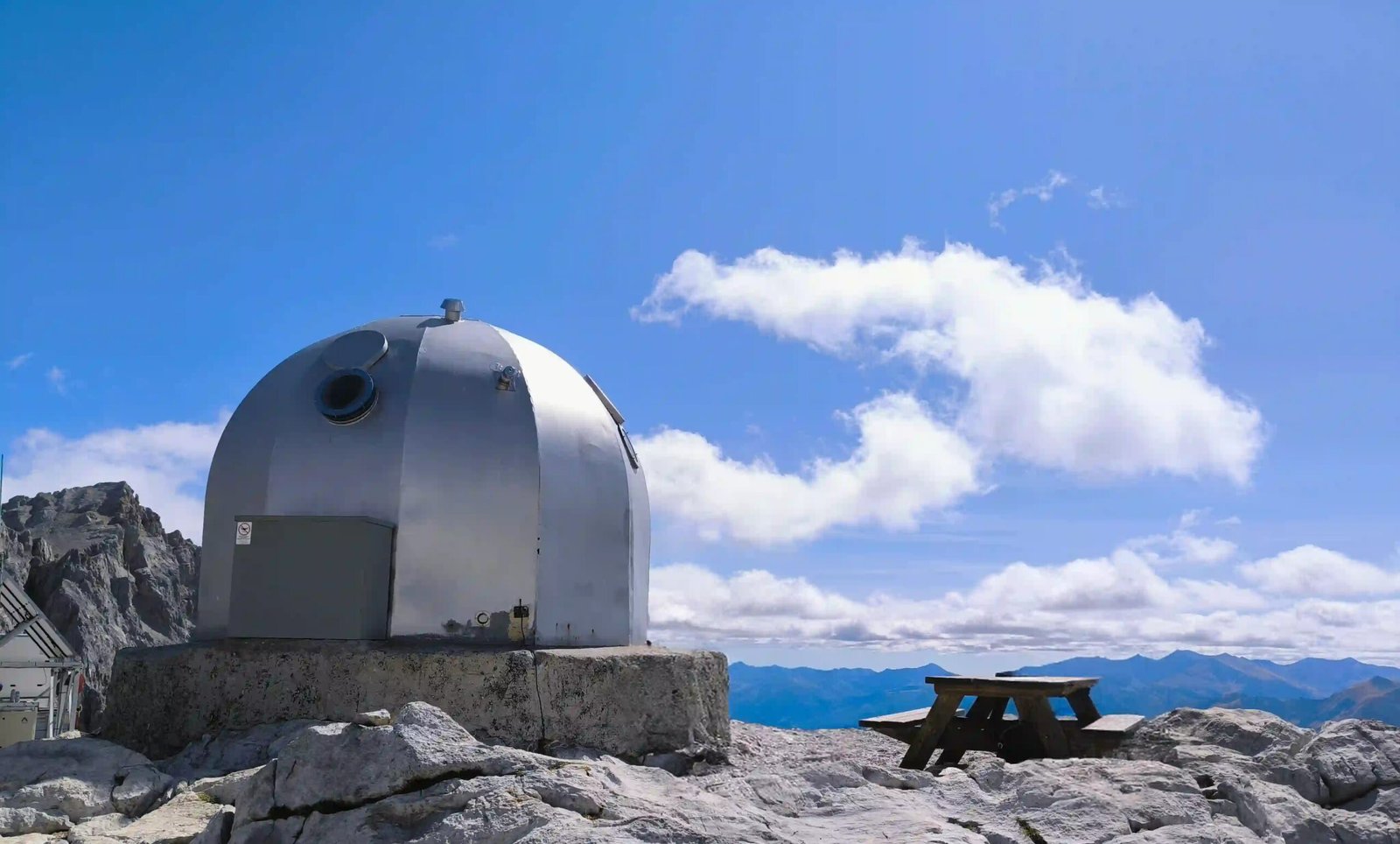
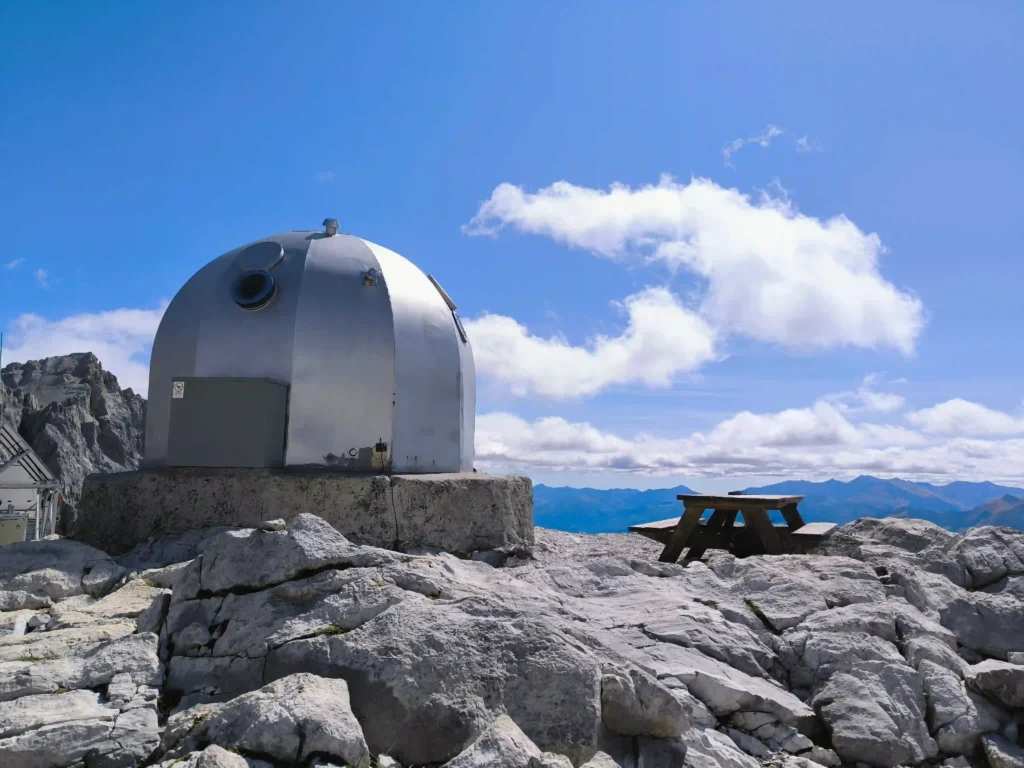
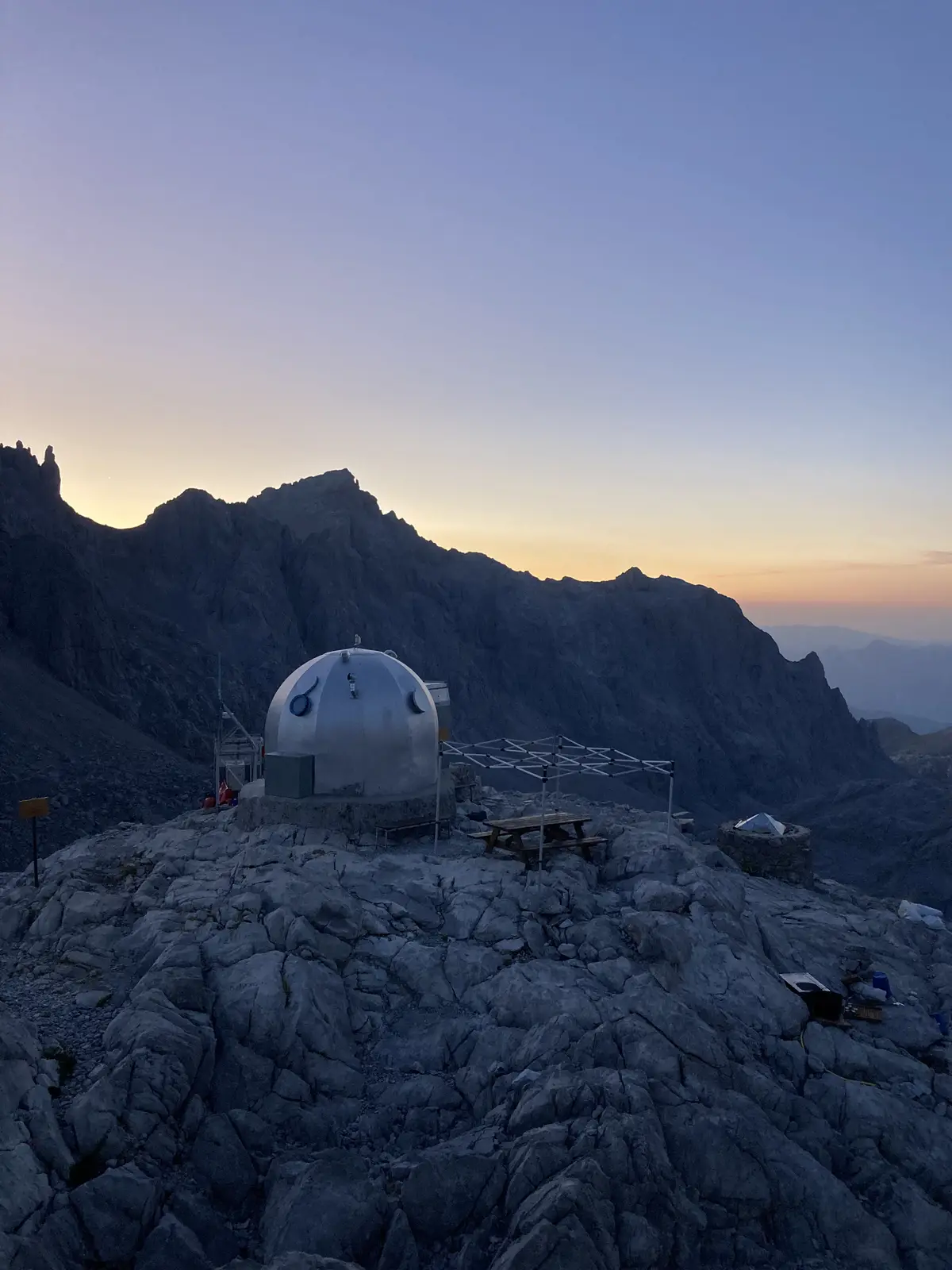
If there is one spot on the map of Cantabria that sparks immediate curiosity, it’s Cabaña Verónica. Perched at 2,325 meters in the heart of the Central Massif of Picos de Europa, this mountain hut is like nothing you’ve seen before. It is a metallic semi-sphere of barely 9 square meters—a steel igloo embedded in a desert of white limestone.
At Cantabria Treks, we have summited this area countless times, and there is always someone staring at the structure, wondering how it got there. The answer is as fascinating as the hut itself: it is actually the recycled anti-aircraft gun dome from the WWII American aircraft carrier, the USS Palau.
In this guide, I’ll share the history of this legendary spot, the man who gave it a soul, and how to plan your visit safely.
History & Origin: From an Aircraft Carrier to the Peaks
Bringing this shelter to Picos de Europa in the 1980s was a feat of mountain logistics. Thanks to the determination of Conrado Sentíes, the metallic structure (made of magnesium and aluminum to resist sea corrosion) was rescued from a scrapyard and brought to this rocky spur.
It took a Spanish Air Force Chinook helicopter to transport the dome in one piece. Because it is made of metal, the hut is a high thermal conductor—it cools down and heats up rapidly depending on the sun. Its aerodynamic shape isn’t a coincidence; it was originally designed to offer zero wind resistance, a crucial feature when the fierce North and South winds sweep across the Picos.
Mariano Lozano: The Legend of Cabaña Verónica
You cannot talk about Cabaña Verónica without mentioning Mariano Lozano, the hut keeper who looked after this place for 25 years. Mariano wasn’t your typical keeper; he lived up there year-round with a level of austerity that seems unthinkable today. With no running water or conventional electricity, he carried all supplies on his back or with the help of his mule.
Mariano became an institution in the Picos. His knowledge of the terrain was absolute, and his presence saved many lives when the “nublo” (the thick, sudden mountain fog) or storms rolled in. Although Mariano is gone, the hut maintains that spirit of hospitality. It remains a fantastic stop where a hot coffee or a cold drink awaits the weary trekker.
The Route: Step by Step from Fuente Dé
The most popular and scenic access starts at the upper station of the Fuente Dé cable car, known as El Cable.
Technical Data:
- Distance: 9,5 km (round trip).
- Elevation Gain: 500 meters.
- Terrain: Mountain track & technical limestone paths.
- Estimated time: 3.5 to 4 hours (steady pace).
The trek begins on a wide track crossing the Lloroza area, a landscape of alpine meadows dotted with “jous” (deep karst depressions). Once you reach La Vueltona, the terrain changes: the track ends, and you begin a zig-zag ascent through a white limestone scree.
This is a land of “lapiaces” (deeply furrowed rocks) where the sun’s reverberation is intense. High-quality polarized sunglasses and sun protection are mandatory, as the glare off the pale rock can be punishing. As you gain altitude, peaks like Tesorero or Horcados Rojos loom larger until, after one final push, the silver dome appears.
Winter at Cabaña Verónica: Snowshoes and Safety
Visiting Cabaña Verónica in winter is one of the most incredible experiences in Cantabria, but it requires experience. The mineral landscape transforms into a vast white desert. It is a perfect route for snowshoeing or ski touring, as the relief is relatively gentle until the final ramps.
Crucial Safety Note: The hut is only fully staffed and open during the “snow-free” season (usually June to October). In winter, it remains closed to the general public, though a tiny emergency gallery is always left open. It is a minimal space meant for survival if the weather turns—not for a planned overnight stay.

Logistics: What to Expect at 2,325m
Cabaña Verónica is a subsistence shelter, not a mountain hotel. Keep these points in mind:
- Sleeping: There are only 6 spots available in very compact bunk beds. In a 9-square-meter space, you’ll be sharing everything with fellow hikers! If you plan to sleep inside, booking in advance is mandatory.
- Prices: Rates are budget-friendly, which helps maintain the structure and the mountain keeper’s services.
- Water: There are no natural springs or potable water sources. The Picos limestone filters all rainwater deep underground. While the keeper sells bottled water, my advice is to leave Fuente Dé with at least 2 liters in your pack.
- Food: Drinks, coffee, and very basic meals are served. Keep in mind that everything you consume has been carried up on someone’s back or through complex logistics.
Additionally, sharp changes in pressure and temperature can affect your joints and blood pressure. So, if you feel a bit ‘off’ on a day with Southern winds, it’s not in your head; it’s just physics.
Preguntas Frecuentes (FAQ) sobre Cabaña Verónica
- Can children go? Yes, if they are used to mountain walking. There are no dangerous drops, but the loose stone is tiring.
- Is there mobile coverage? Very limited. It disappears as soon as you drop into the “jous.” Don’t rely solely on your phone for navigation.
- When is the best time? June to September for hiking; January to March for snowshoeing (always check avalanche risks).
Why trek with Cantabria Treks?
While the route looks simple on paper, the Picos de Europa play by their own rules. The karst terrain is confusing; when the fog rolls in, the trails and rocks look identical, and it is very easy to get lost.
We organize specialized treks so you can simply focus on the view and the history:
- 1-Day Trek: Guided technical ascent, hut visit, and return with the evening light. VIEW HIKE
- 2-Day Experience: For those who want to sleep in the dome (summer) or bivouac under the stars to see the limestone turn orange at sunset. VIEW HIKE
Cabaña Verónica is a place with a special energy—a piece of history that has earned its right to be part of the Cantabrian landscape. I’ll see you on the trail!