Vega de Liordes: The Coldest Spot in Spain | Hiking Guide
If you look for Vega de Liordes on a map, you’ll see a green patch surrounded by the most rugged peaks of the Central Massif. But if you look for it in meteorological records, you’ll find something much more striking: Liordes is, technically, one of the frostiest points in the entire Iberian Peninsula.
It is a CAP (Cold Air Pool). Due to its closed basin shape and high altitude, cold air—which is heavier—sinks and gets trapped at the bottom of the meadow during clear winter nights. While not an official AEMET (Spanish Weather Agency) record, specific monitoring stations have recorded temperatures as low as -35°C (-31°F) at this spot. Hiking here means walking through a place of extreme conditions.
Route Technical Sheet (From Fuente Dé)
- Distance: 12.5 km (round trip).
- Elevation Gain: 950 m.
- Min. Altitude: 1,070 m (Fuente Dé).
- Max. Altitude: 1,950 m (Alto de los Tornos).
- Terrain Type: Zigzagging mountain path, loose rock (scree), and alpine meadows.
- Estimated Time: 5 to 7 hours depending on pace and stops.
The Ascent via Tornos de Liordes: The Limestone Wall
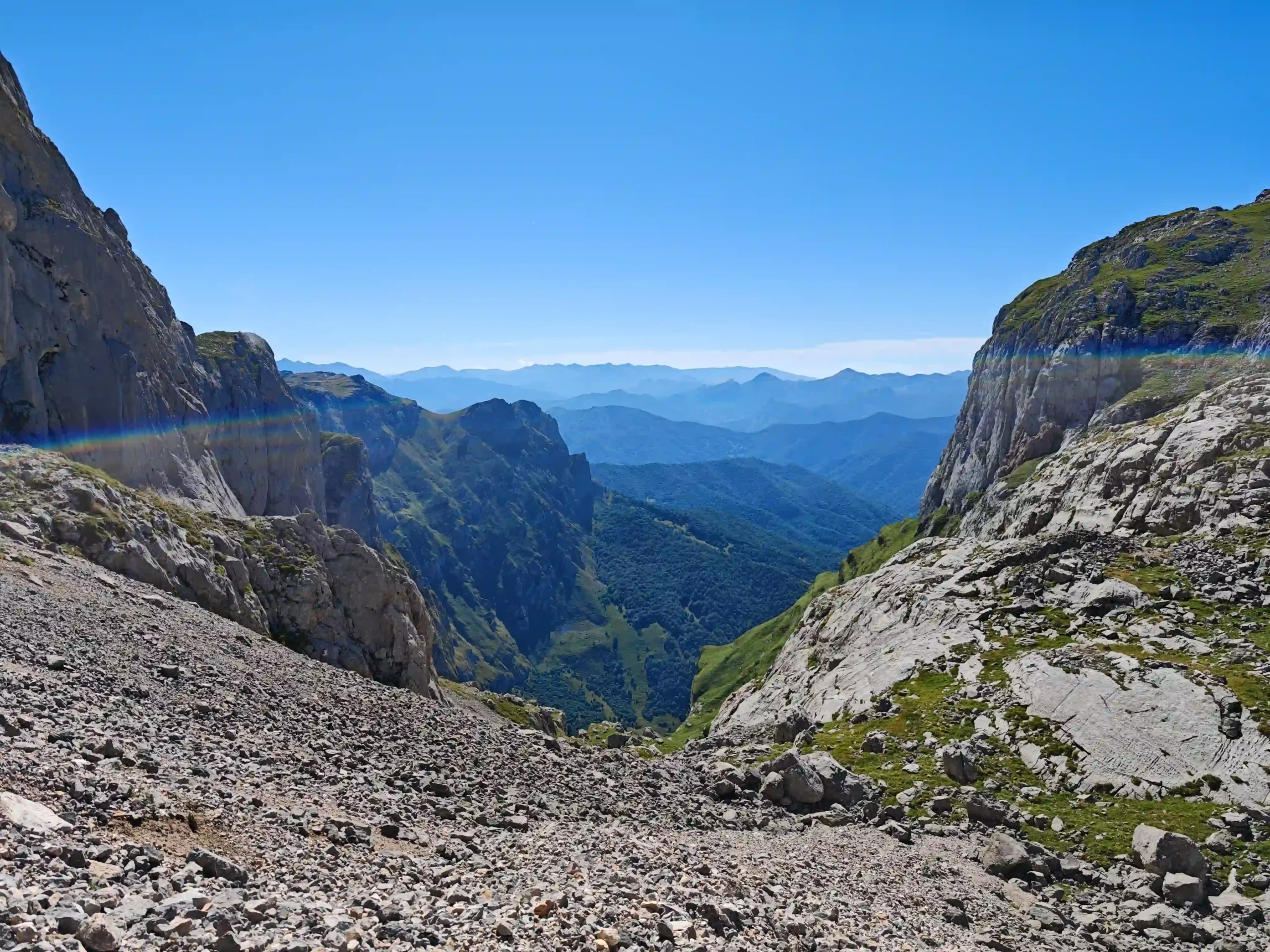
To reach this natural “freezer,” the most direct path starts from the base of Fuente Dé, right next to the lower cable car station. Ahead of us lies the wall of the Tornos de Liordes. These are more than 40 switchbacks carved into the mountainside that clear a vertical drop of nearly a thousand meters.
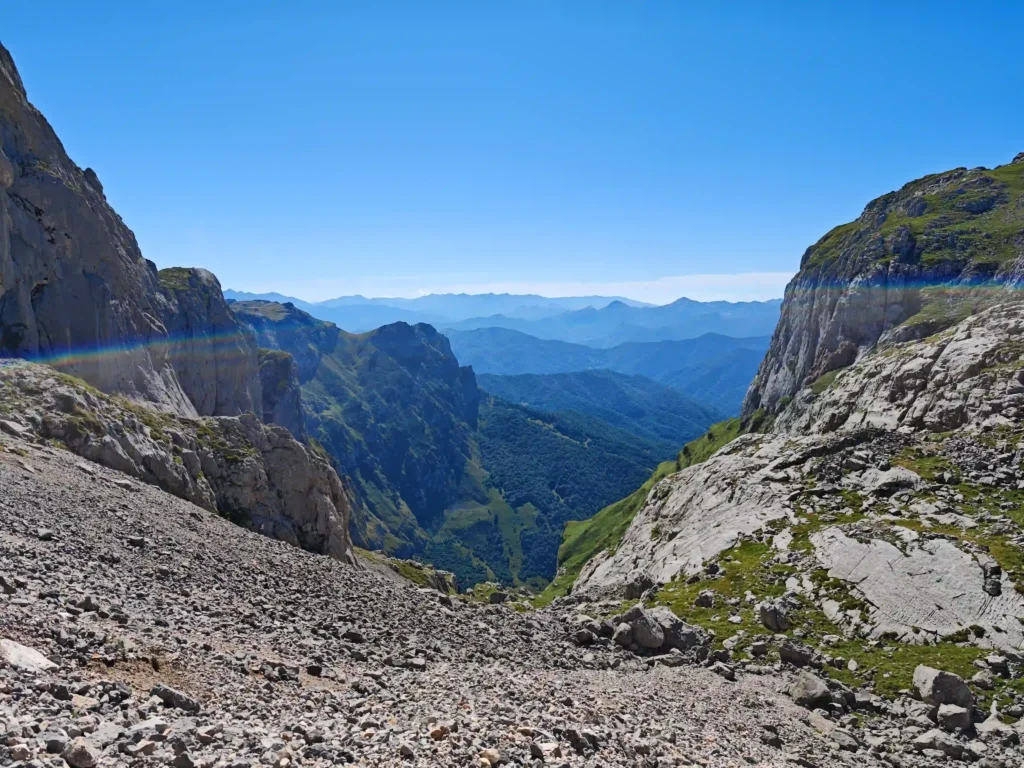
The terrain is pure limestone. As you climb, you feel the heat radiating from the rock under the sun—ironic, considering how cold it can get up there. This is a rhythmic ascent. The ground has quite a bit of loose rock (cascajal), requiring a steady footing to avoid slipping. As you gain height, the views over the Camaleño Valley become increasingly airy, but the real reward comes when the terrain suddenly levels out upon reaching the pass.
Entering the CAP: The Liordes Basin
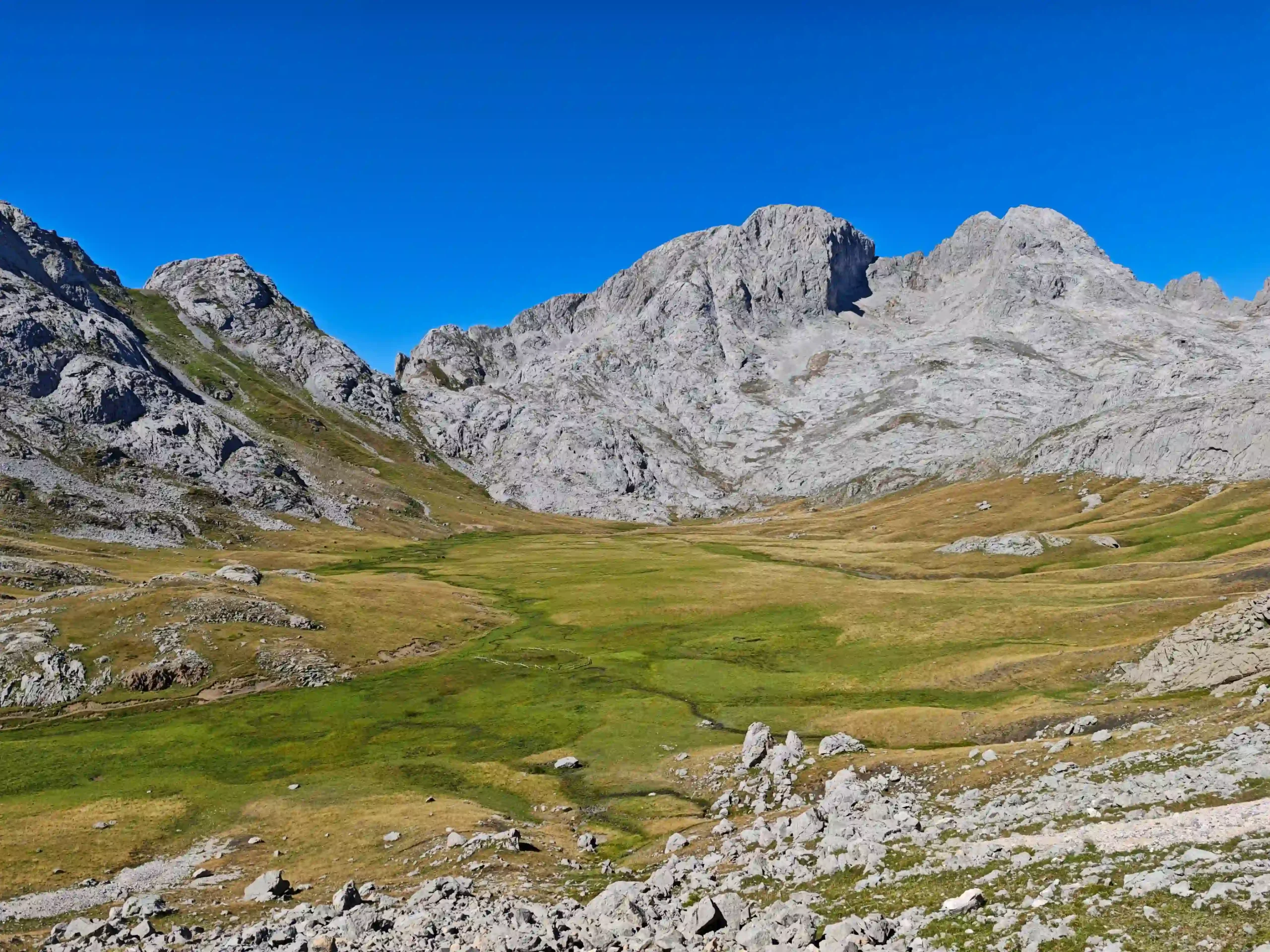
Once you finish the Tornos, you enter the Vega. It is a radically different landscape: a grassy plain surrounded by towering rock spires like Torre de Salinas, Peña Remoña or La Padiorna.
Being a Cold Air Pool, the environment here differs from the surrounding peaks. In winter, this place is an icy desert. In summer, it’s a meadow where the morning dew is often frozen even in July. The CAP phenomenon means that on nights with thermal inversion, the temperature difference between the Vega de Liordes and the surrounding summits can exceed 15°C. Down at the bottom of the basin, the air feels denser and heavier. It is an absolute silence, broken only by the sound of the wind rolling down from the peaks and stagnating in this stone bowl.
Logistics and Preparation: How to Get There and What to Pack
Planning is key to tackling this route. Liordes does not forgive a lack of foresight.
Access and Parking:
The trailhead is in Fuente Dé (Cantabria). There is a large parking lot, but in high season it fills up before 10:00 AM. My advice is to start hiking early—not just for the parking, but to avoid the direct sun on the Tornos ascent, which offers absolutely no shade.
Specific Gear for the Terrain:
- Footwear: Mountain boots with high-traction soles (like Vibram). The loose limestone of the Tornos is very slippery on the descent.
- Clothing: Even in August, carry a technical warm layer. If the weather shifts or you stop for lunch in the Vega, you’ll notice the temperature drop quickly due to the humidity trapped in the basin.
- Sun Protection: Sun glare off the white limestone of the Picos is intense. Sunglasses are essential in summer.
Safety and Tips from Cantabria Treks
- The Fog: Liordes is a natural basin. If fog rolls in from the south (Valdeón Valley) or the east, it can get trapped inside the meadow. In these moments, finding the exit towards the Tornos can be a challenge even with a GPS.
- Water Management: Liordes filters almost all its water into the karst interior. There is a spring in the northern part of the meadow (Fuente de la Pedavejo), but it isn’t always reliable in summer. Always leave Fuente Dé with at least 2 liters of water.
- Knee Strain: The descent of the Tornos is a “litmus test” for your legs. It’s a nearly 1,000-meter uninterrupted drop on unstable terrain. Using trekking poles is mandatory here to offload weight from your joints.
Frequently Asked Questions (FAQ)
- Is it suitable for children? Only if they are very experienced in the mountains and used to high elevation gains. It’s not dangerous in terms of falling, but it is very fatiguing.
- Can I bring my dog? Yes, but keep in mind that the limestone terrain is very abrasive for their paws and there is no water along the entire trail.
- Can it be done in winter? Only with mountaineering gear (crampons and ice axe). The Tornos switchbacks get covered in hard snow and ice, turning into a very dangerous slope.
- Is there a mountain hut in Liordes? There is no staffed refuge. There is a small shepherd’s hut (Cabaña de Liordes), but it is for emergencies only and is usually in very basic condition.
Want to Discover the Cold Heart of the Picos de Europa?
As a guide, I like to explain that the mountains are about more than just going up and down. Understanding phenomena like the CAP of the Vega de Liordes makes the route much more interesting. Tasting the silence of this place, knowing that record-breaking temperatures have been recorded beneath your feet, changes how you look at the landscape of our tierruca.
My job at Cantabria Treks is to ensure you enjoy the climb without worrying about navigation or pacing. If you want to hike to this unique corner of the Picos de Europa safely while understanding everything happening around you, book a day with me.