South Wind in Cantabria: Much More Than Just Warm Air
If you live in Cantabria or visit often, you’ve noticed those days when the temperature suddenly jumps ten degrees, the sky turns an electric blue, and the mountains look so sharp they feel close enough to touch. This is the South Wind (known locally as the Viento Sur).
At Cantabria Treks, we don’t just check the rain forecast; we look at where the air is coming from. The South wind is responsible for our greatest thermal anomalies and some of the most devastating wildfires in our history. But why does it happen? Is it true that it “drives people crazy”? Let’s break it down objectively.
The Physics of the Phenomenon: The Foehn Effect
What we call a surada is a textbook example of the Foehn Effect. Physically, here is what happens: moist air masses travel from the south and hit the natural barrier of the Cantabrian Mountains and the Picos de Europa.
As it hits the mountains, the air is forced to rise to clear them. As it ascends, it cools and condenses its moisture, leaving rain on the southern slopes (Palencia, León, Burgos). By the time that air crowns the high peaks (picones) and begins to drop toward the Cantabrian coast, it has lost all its humidity.
As it descends the northern slope, the air compresses due to the increase in atmospheric pressure, causing it to heat up very rapidly (approximately 1°C for every 100 meters of descent). The result in Cantabria is a wind that is dry, gusty, and extremely warm compared to the original air mass.
Effects in the Mountains: Deceptive Visibility and Gusts in the “Jous”
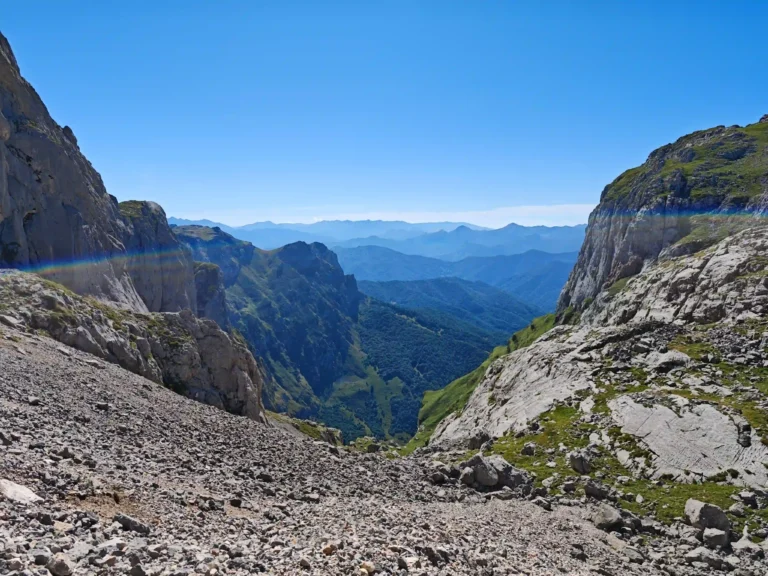
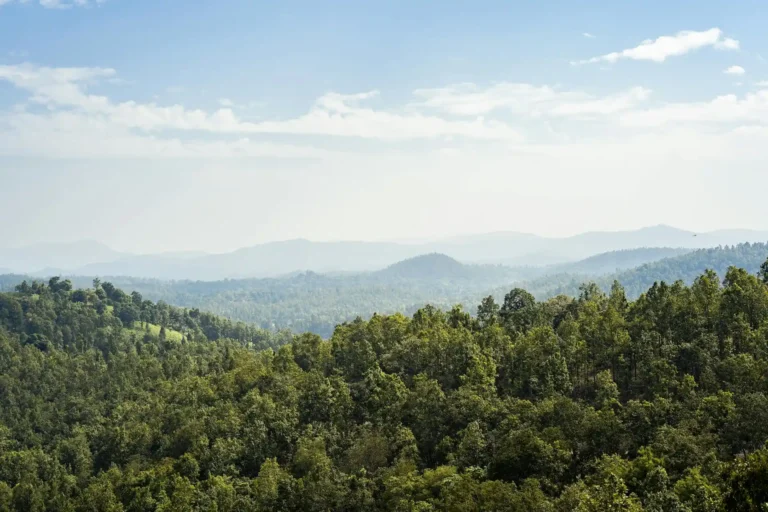
As a guide, the South wind brings mixed feelings. On one hand, the visibility is exceptional. The low humidity eliminates haze, allowing for astonishingly clear views from the deepest jous (high-altitude limestone basins) of the Picos de Europa all the way to the sea.
However, the danger in the mountains is real and objective:
- Hurricane-force Gusts: The wind accelerates through mountain passes and couloirs due to the Venturi effect. A surada blowing at 60 km/h on the coast can easily exceed 100 km/h on the peaks of Liébana, making it very difficult to maintain balance in exposed areas.
- Accelerated Dehydration: Because the air is so dry, the body loses water much faster than we realize, as sweat evaporates instantly.
- Fire Risk: The South wind dries out vegetation and brañas (mountain pastures) in a matter of hours. In Cantabria, the largest waves of forest fires always coincide with prolonged South wind episodes.
Fiery Skies: Why the South Wind Tints the Sunsets
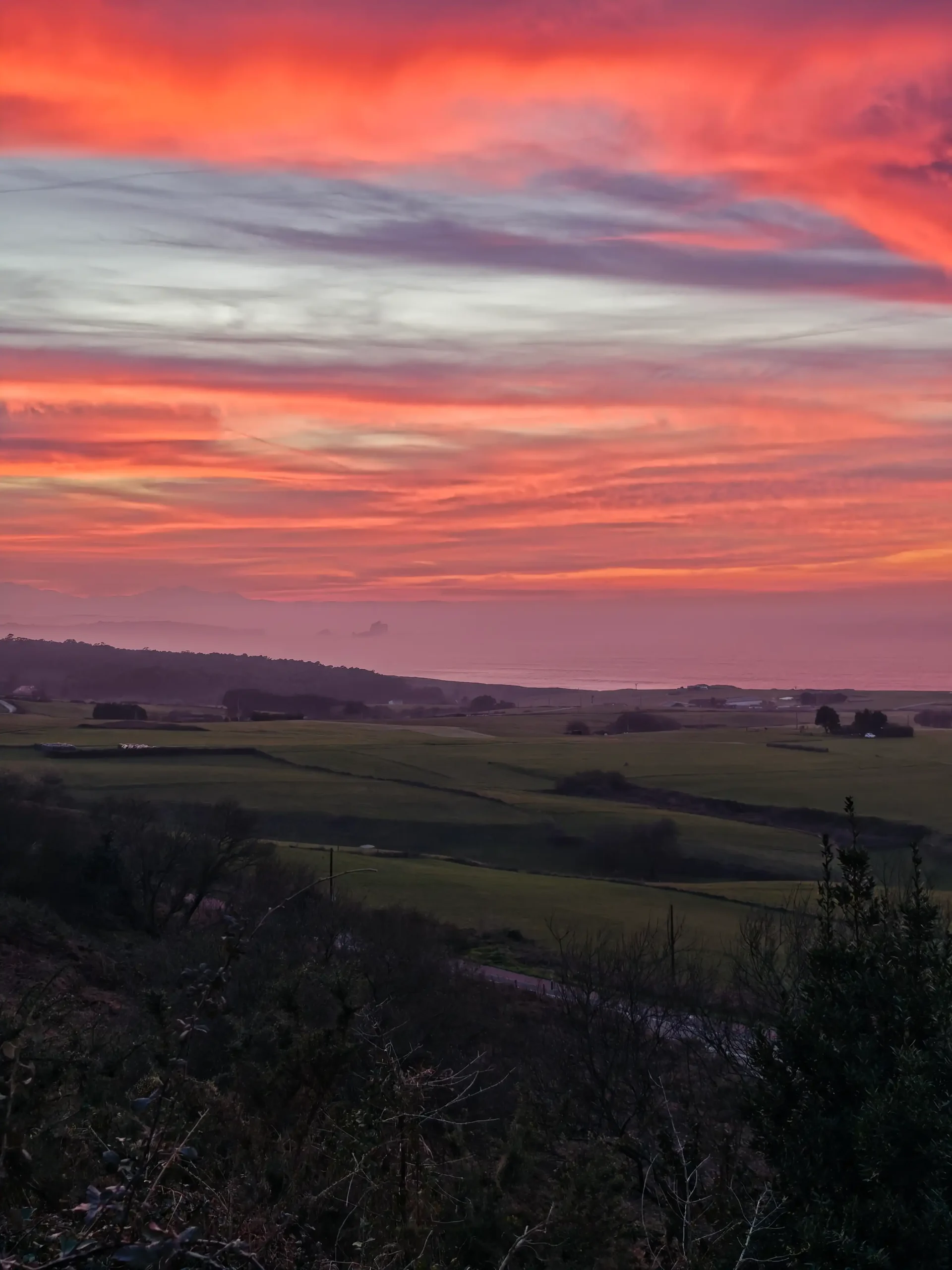
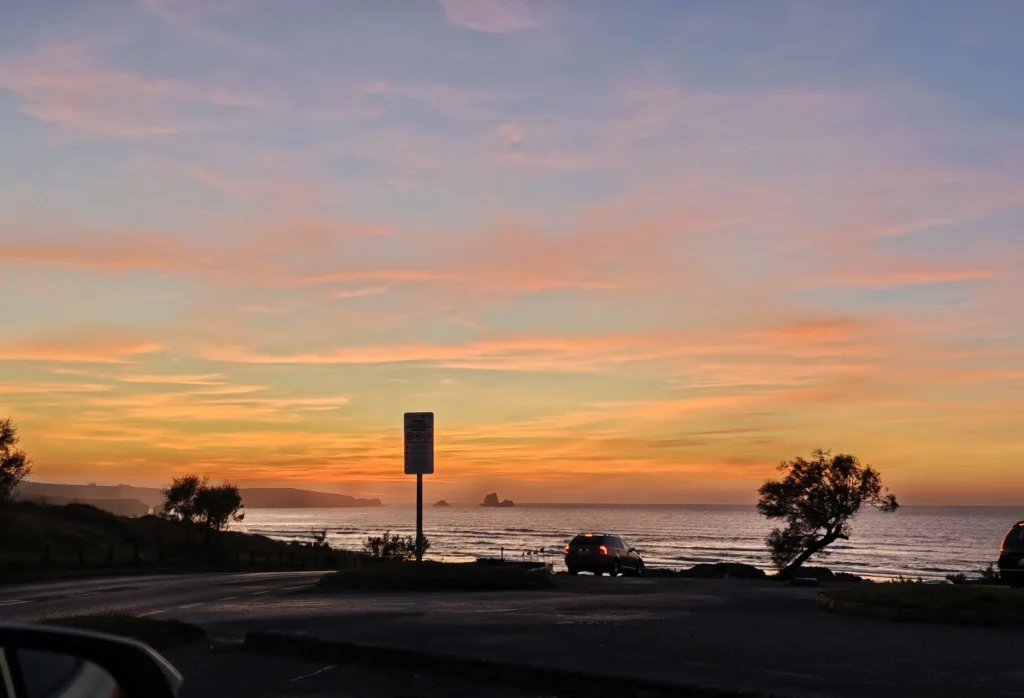
It’s not all discomfort and heavy gusts. The South wind gifts us, without a doubt, the most powerful sunsets in the tierruca (our homeland). You’ve likely seen those skies that look like they’re on fire, with highly saturated red and orange tones reflecting off the sea or the limestone of the Picos.
There is a real physical explanation for this. The air brought by the surada is extremely dry and often carries suspended particles (dust or aerosols). When the sun is low on the horizon, its light must travel through a much thicker layer of the atmosphere.
When we add high, thin clouds like cirrus (those clouds that look like white brushstrokes), the red light scatters and projects onto them. In Cantabria, a “blazing” sunset is the visual signature that the South wind is ruling the upper layers of the atmosphere. It creates a visual sharpness that only this wind can generate.
Myths and Truths: The “Wind of the Mad”?
There is a widespread popular belief that on days with a South wind, people are more irritable, traffic accidents increase, and hospital admissions rise.
Is there any truth to this?
It’s not just an urban myth. Studies in biometeorology indicate that Foehn-type winds cause an alteration in atmospheric ionization, leading to an excess of positive ions in the air. Physiologically, this can trigger an increase in serotonin and adrenaline levels in the blood, which translates into headaches, irritability, anxiety, or insomnia in sensitive individuals (meteorotropism).
Furthermore, the sudden change in pressure and temperature affects joints and blood pressure. So, if you feel “strange” on a South wind day, it’s not just your imagination; it’s physics.
Extreme Events: The Great Fire of Santander (1941)
You cannot talk about the South wind in Cantabria without mentioning February 15, 1941. A historic surada with gusts exceeding 140 km/h fanned a fire that began on Cádiz Street and ended up destroying almost the entire historic center of Santander.
The wind was so strong and dry that sparks flew hundreds of meters, jumping from rooftop to rooftop. It was the greatest urban catastrophe in our history and a cruel reminder that, under certain conditions, the South wind is ungovernable.
Curiosities: The “Chestnut Wind”
In autumn, the South wind is often called the “viento de las castañas” (chestnut wind). This is a popular and descriptive name: it refers to the strong, dry wind of October and November that helps the chestnuts finish drying and fall to the ground. For the locals in the inland valleys, a surada in November is the signal that it’s harvest time.
Safety Tips if You Get Caught on a Trail
If you are in the mountains and the surada begins to intensify, keep these points in mind:
- Secure your gear: Backpack covers or caps can blow away in a second.
- Avoid ridges: If the gusts are strong, move down from the ridgelines and seek shelter on the more protected slopes or valley floors.
- Drink even if you aren’t thirsty: As mentioned, evaporation is constant.
- Watch out for trees: In forested areas (like the Saja Forest), the South wind can easily break dry branches. Pay close attention to the sound of the forest canopy.
Want to Discover the Weather of Cantabria?
On every trek we lead, we always dedicate time to observing wind forecasts. Understanding why the air moves the way it does gives you an extra layer of safety and a deeper connection with the environment. Cantabria is a land of contrasts, and the South wind is the architect of many of them.
If you want to hike through the Picos de Europa or along the coastal cliffs while understanding every phenomenon surrounding us, we are waiting for you.