Costa Quebrada Guide: Liencres, La Picota, La Arnía & Covachos
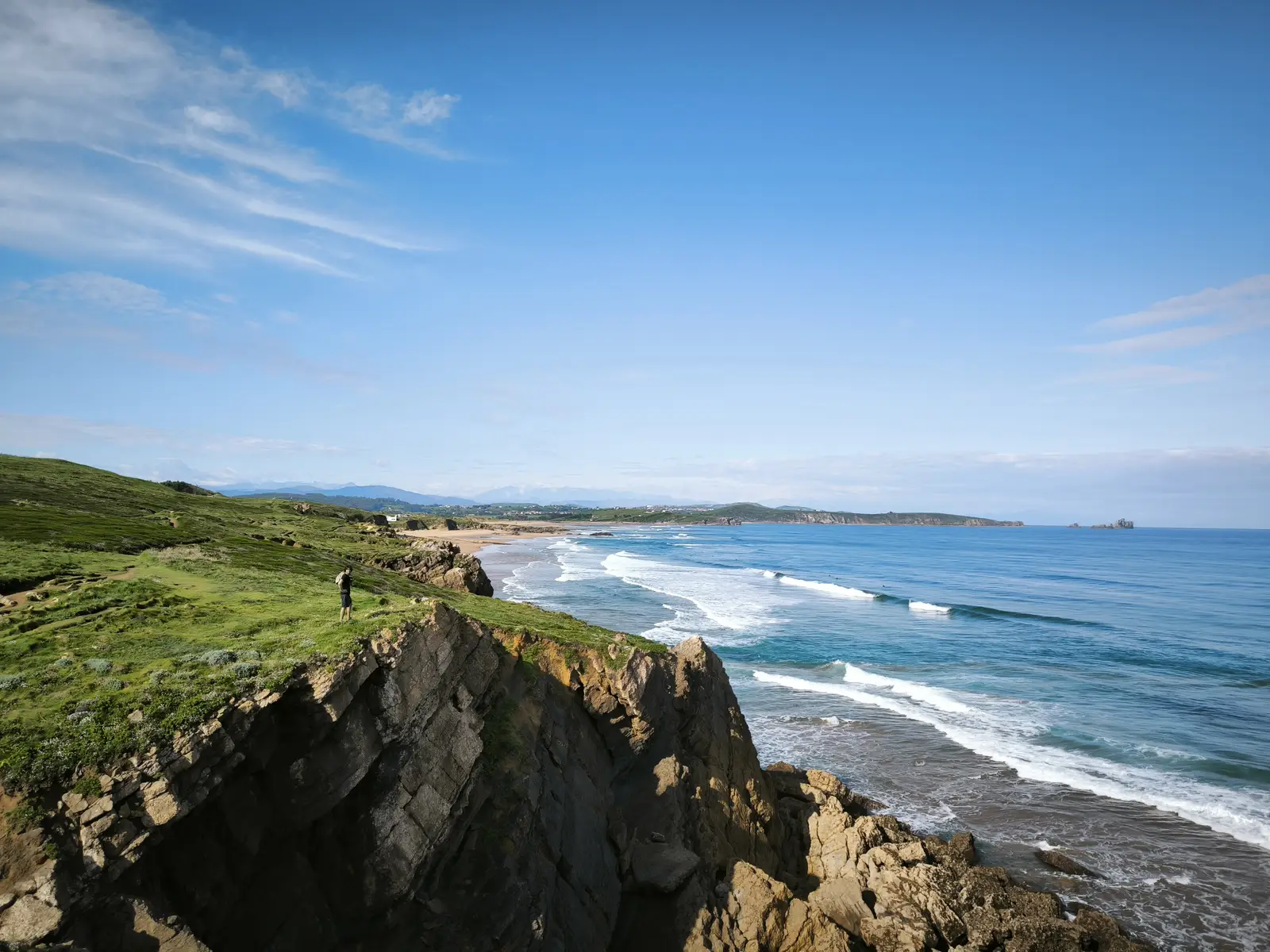
If there is one place in the “tierruca” (our beloved homeland) that perfectly captures the battle between the Cantabrian Sea and the land, it is Costa Quebrada (The Broken Coast). At Cantabria Treks, we frequently guide through this stunning coastal strip stretching from Santander’s beaches to the Liencres dunes. You don’t need to venture deep into the Picos de Europa to feel the raw scale of nature; here, the cliffs and jagged rock formations tell a story spanning millions of years.
I am not a geologist, nor do I intend to give a technical lecture on strata. However, after guiding countless hiking groups along these trails, you learn to read the scars left by the Cantabrian Sea. In this post, I want to share what we discover on our guided hiking routes through Liencres, La Picota, and La Arnía: a blend of military history, ancient fortresses, and a coastline that literally shatters with every step.
La Picota: The Strategic Lookout of the Abra del Pas
In almost all our Costa Quebrada hiking tours, we make it a point to summit Mount La Picota (also known as Mount Tolío). It’s a short but steady climb over rocky terrain and heather that will definitely wake up your legs.
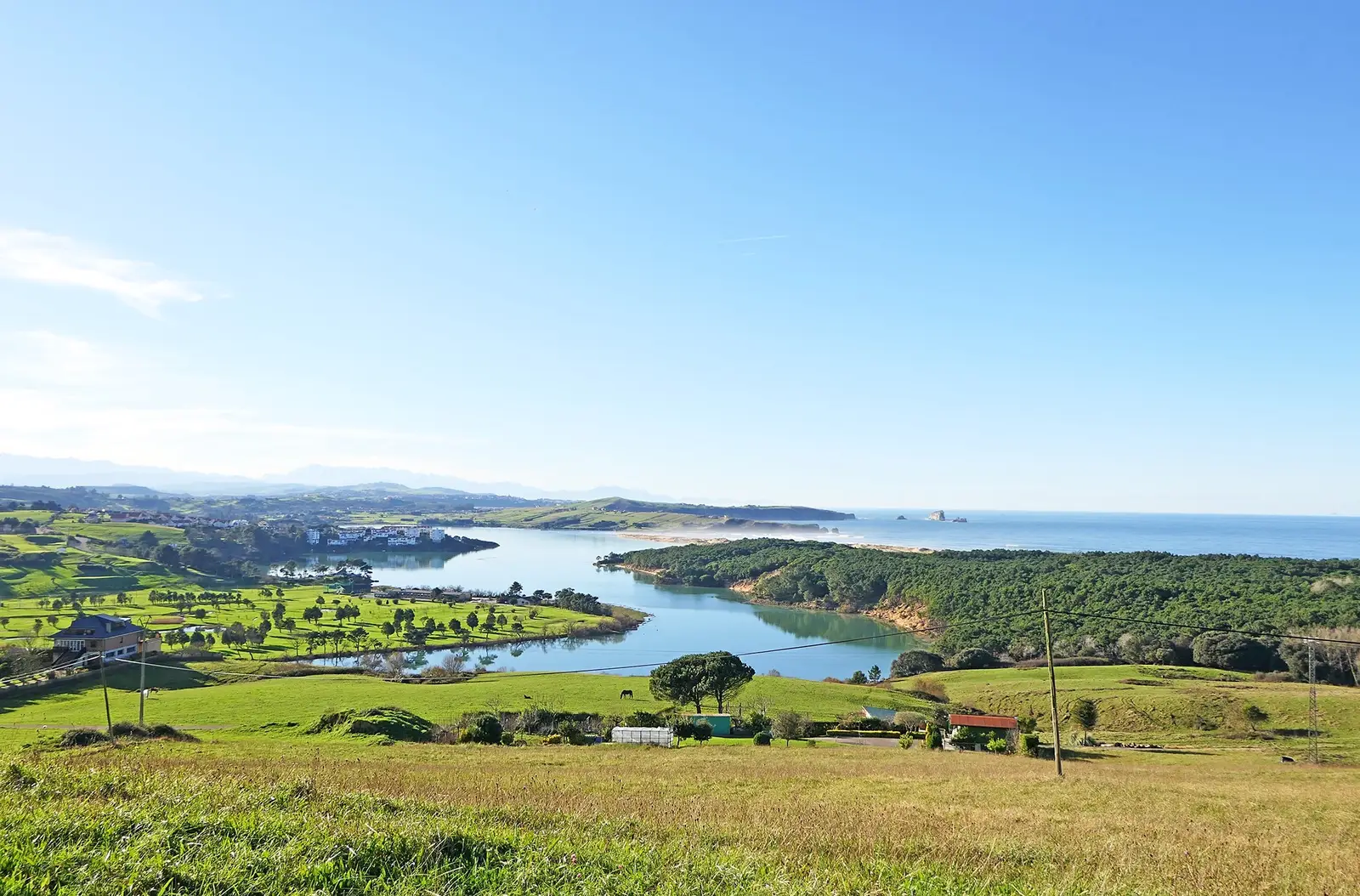
From the summit at 240 meters, you get arguably the best panoramic view of central Cantabria: the Pas River meanders carving perfect curves into the landscape before merging with the ocean.
But the most intriguing part of La Picota isn’t just the view. As we hike, we encounter the remnants of a raw, recent history. During the Spanish Civil War, this was a vital defensive point for Santander. You can still see machine-gun trenches and concrete bunkers overlooking the river mouth—cold structures carved into the rock that the coastal scrub is slowly trying to reclaim.
Looking further back to medieval times, you’ll find the ruins of Pedraja Castle (or Liencres Castle). Though only fragments of the walls and the tower base remain hidden in the brush, it was once a key fortification for controlling the valley.
Liencres Dunes Natural Park
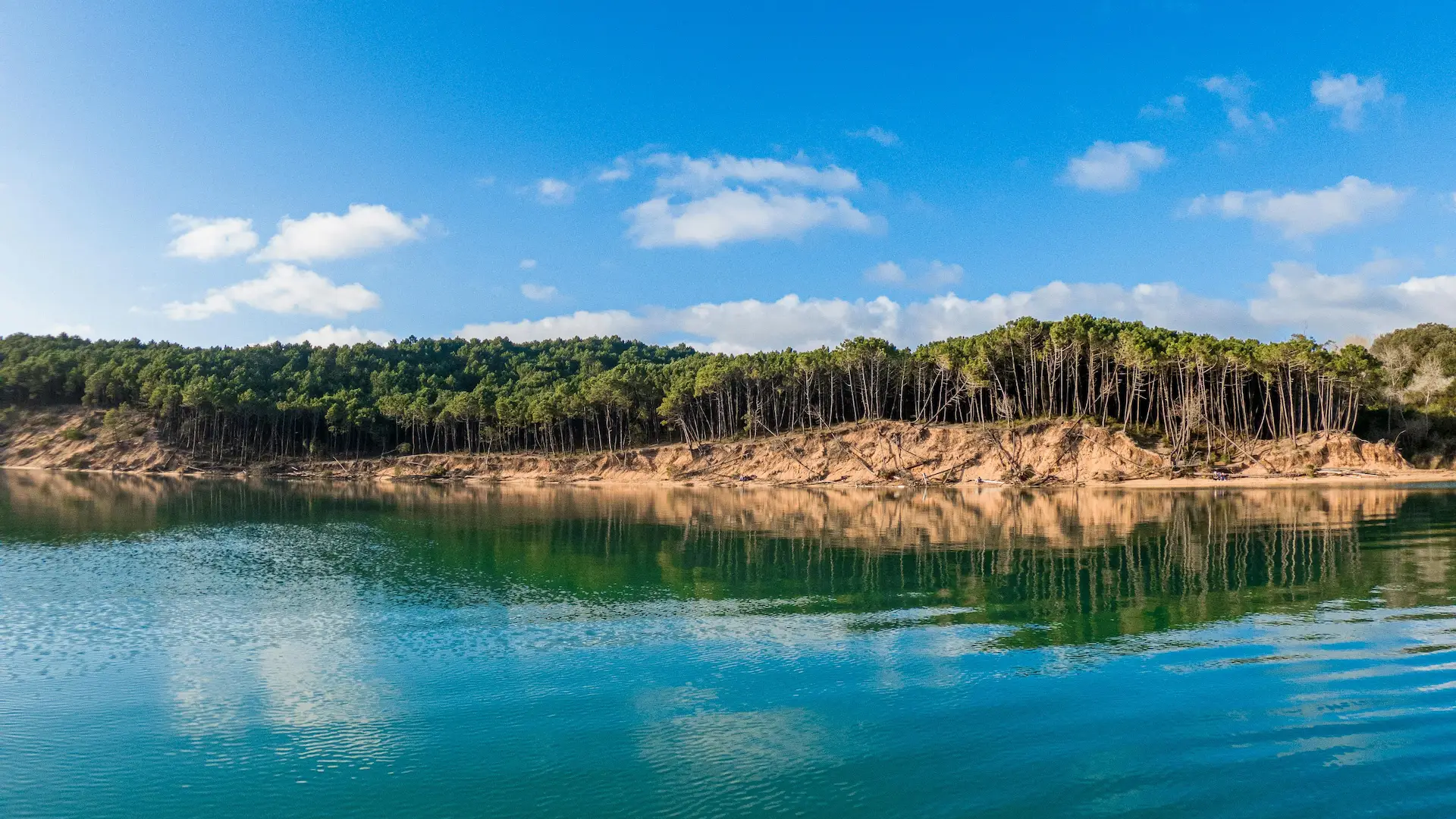
Just below La Picota lies the Liencres Dune System, one of the most important in Northern Spain. These dunes are alive; they shift with the wind and winter storms, burying paths and creating new shapes every season.
The maritime pine forest surrounding the dunes wasn’t planted just for aesthetics. It was established in the mid-20th century to stabilize the sand and restore the forest. Walking here, where the scent of resin meets the sea salt, is a sensory delight. Trekking through soft sand requires a different effort than solid rock, but watching the Pas River collide with the sea makes every step worth it.
La Arnía and the Urros: The Stone Book of the Coast
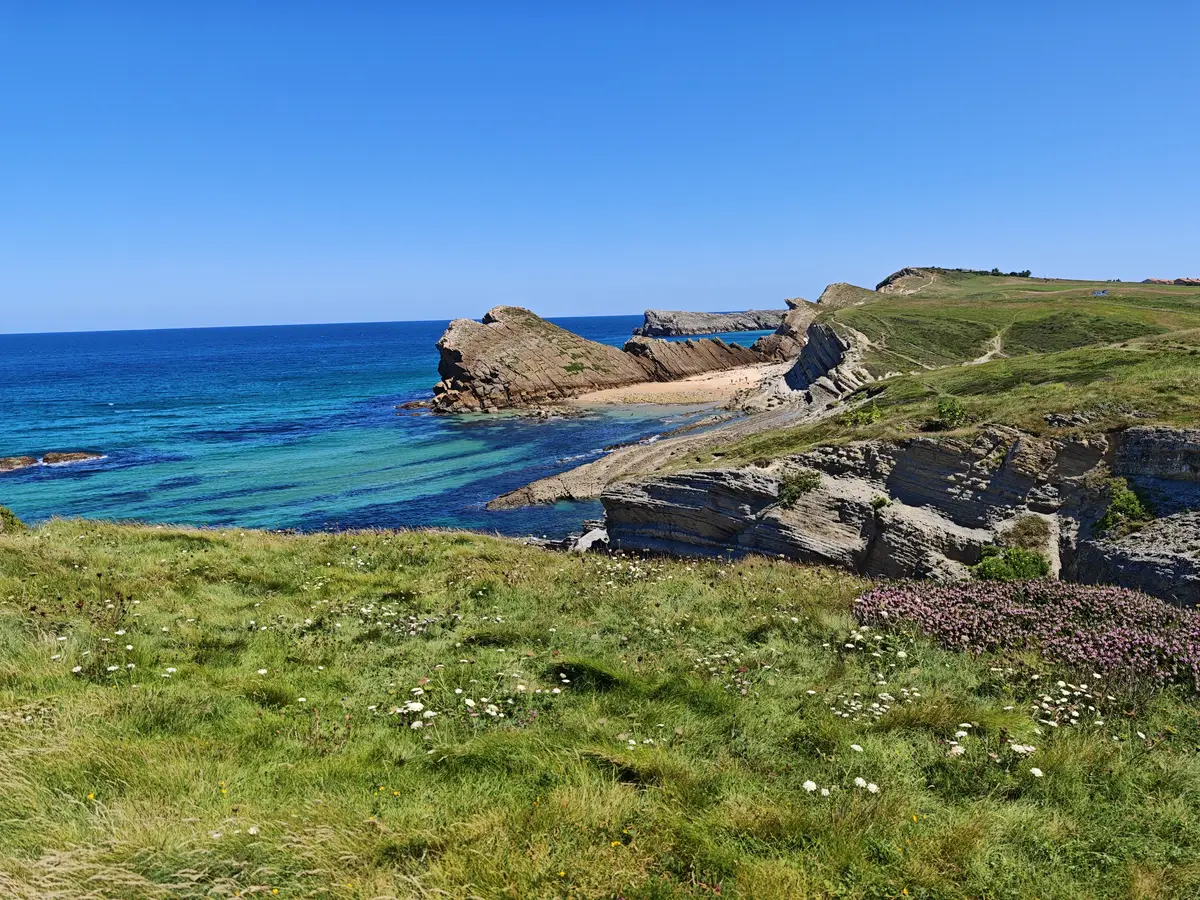
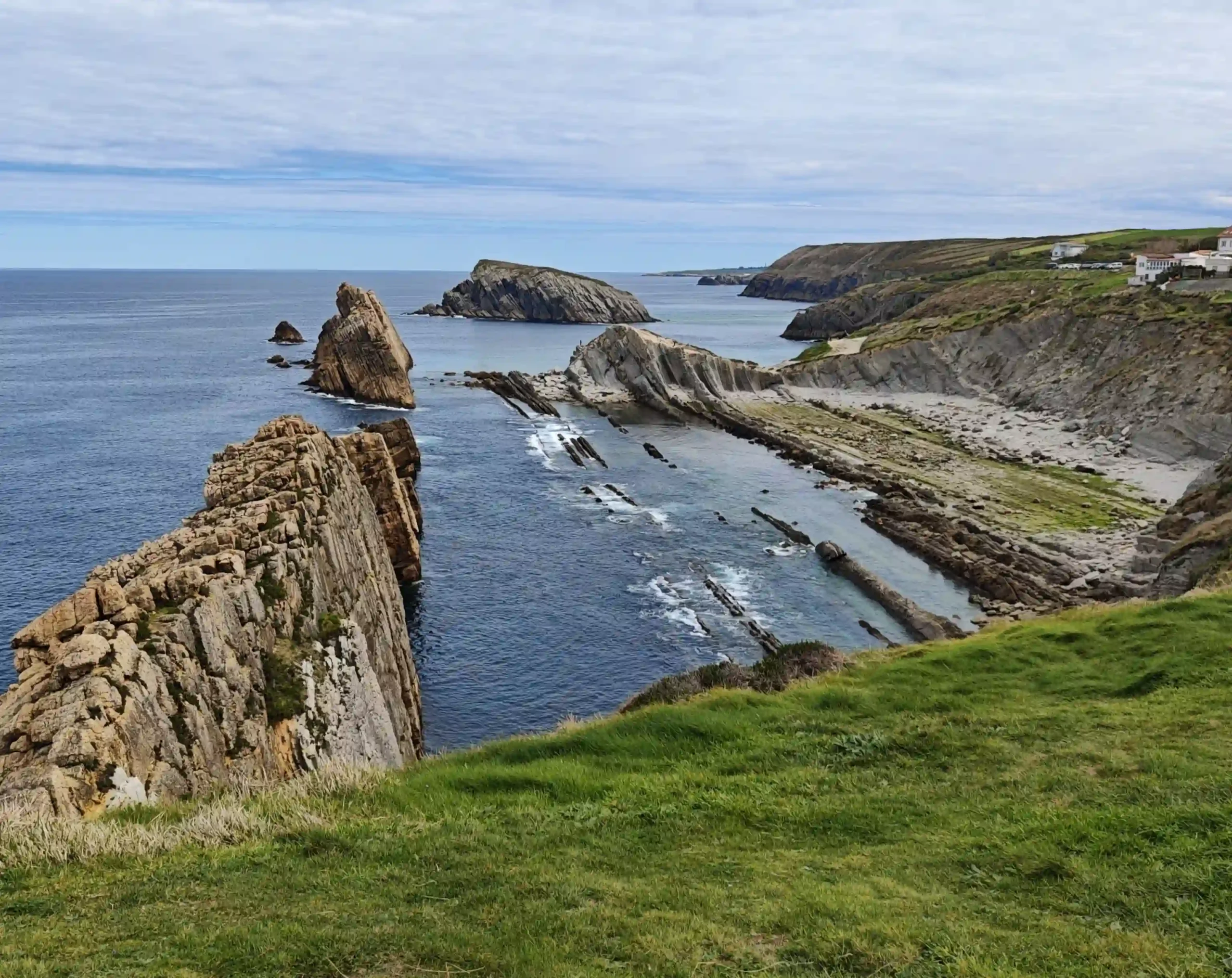
Heading east along the coastal path, we pass wild inlets like El Madero, Cerrias, and Portio until we reach La Arnía. This is where Cantabria’s geography becomes aggressive and visually stunning. You’ll witness the famous “Urros”—massive rock islets isolated from the cliffs by centuries of marine erosion.
At La Arnía, the “Flysch” formations are perfectly visible. These are folds of sedimentary layers from ancient deep seas, tilted vertically over millions of years. They look like the pages of a giant stone book. Even if you aren’t an expert in tectonic pressure, watching the waves crash against the abrasion platforms (flat rock shelves revealed at low tide) is hypnotic.
Hiking Note: This is technical terrain. The fisherman paths we follow are narrow and sometimes exposed. The combination of dirt and loose rock demands a hiking boot with excellent grip.
Covachos: The Tombolo and Castro Island
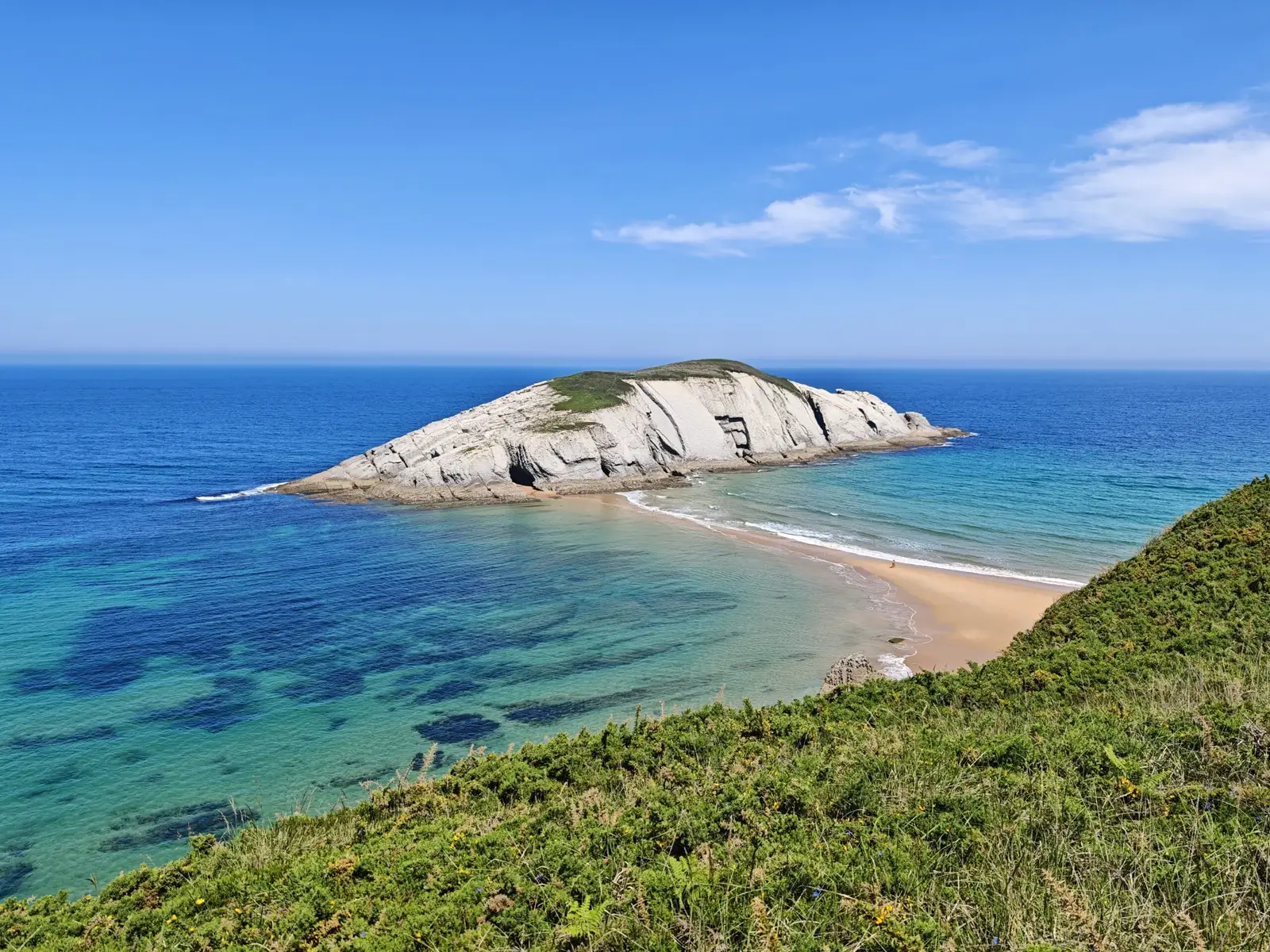
Following the trail, we reach one of the most magical spots on our route: Covachos Beach. What makes this place unique is its tombolo—a natural sand bridge that connects the shore to Castro Island.
Timing the tides is essential here. At low tide, the sea retreats to reveal this sandy corridor, allowing you to walk right onto the island. It’s a surreal feeling walking on ground that was meters underwater just hours prior. But stay alert: once the tide turns, the path disappears quickly, and you could find yourself “enriscado” (stranded) on the island!
Technical Tips for Your Visit
Whether you join one of my Guided Mountain Tours or explore on your own, keep these local secrets in mind:
- The Wind: This area is highly exposed. Strong North or South winds can make the high trails of La Picota very uncomfortable.
- Footwear: Avoid smooth-soled sneakers. The coastal rocks are razor-sharp, and trails turn into slippery mud after rain.
- Water: Just like in the Picos de Europa, there are no fountains on these trails. Carry plenty of water, especially for the climb up La Picota where the sun hits hard.
Ready to trek the coast with a local?
At Cantabria Treks, I have designed two main routes that combine the best of this area so you don’t miss a single “secret” spot. It’s the perfect plan for families or groups of friends looking for an authentic Cantabrian experience.